
As an Amazon Associate I earn from qualifying purchases.
Deciding whether to keep the lid of your grand piano open or closed can influence not only the instrument’s sound but also its roles in different performance settings. When you open the lid of your piano, you’re allowing the sound to project more freely.
This can be particularly beneficial in solo performances or larger venues where the richness and full depth of the piano’s tone need to stand out. On the other hand, with the lid closed, the sound is more contained, which might be ideal for intimate venues or when playing in ensemble settings where the piano should not overpower other instruments.
Want to Learn Piano?Click Here
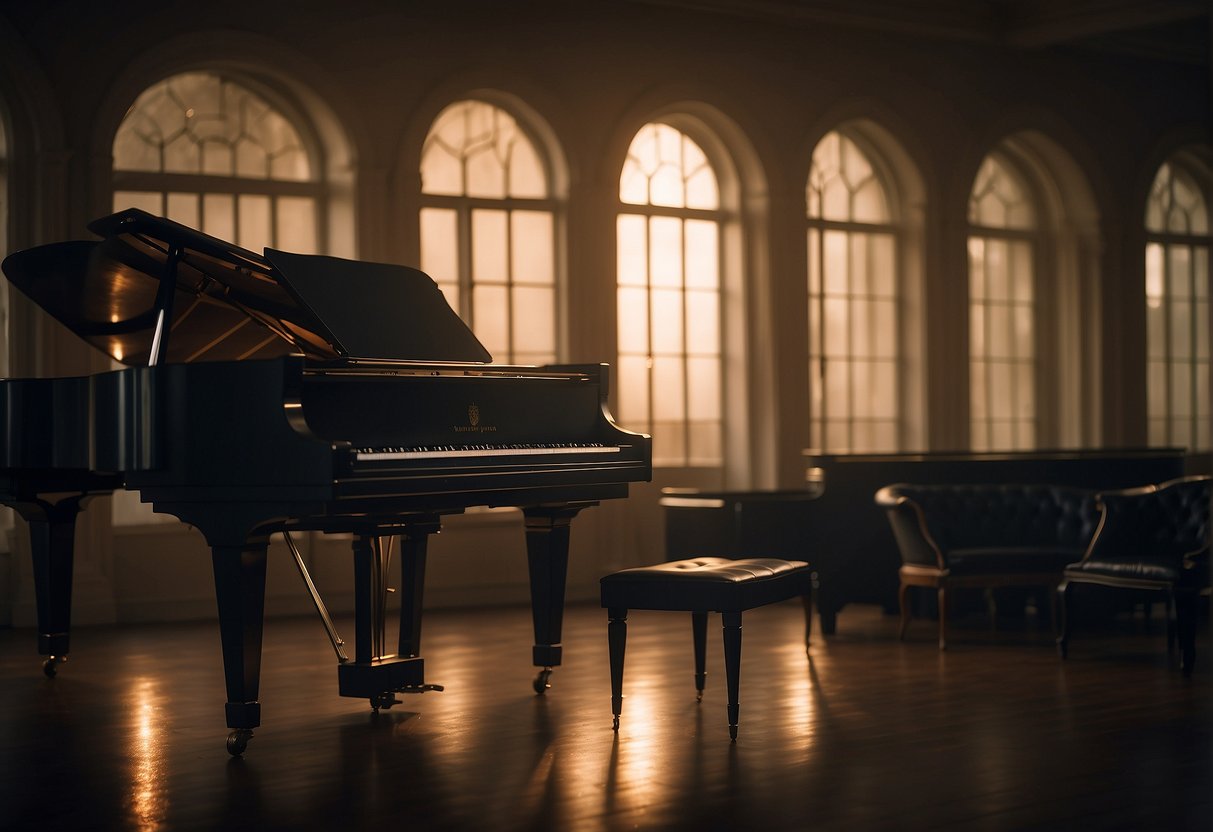
In your home, the decision may hinge on the piano’s location and your personal preferences. For example, a grand piano in a small room might overwhelm the space with sound when the lid is fully open, in which case you might opt for a partially open lid using a short stick, or even fully closed to reduce the volume.
Additionally, if the piano’s high notes seem too piercing, closing the lid can help to mellow the sound. It is all about finding the right balance for your space and the listening experience you seek to create.
Benefits of Opening the Grand Piano Lid
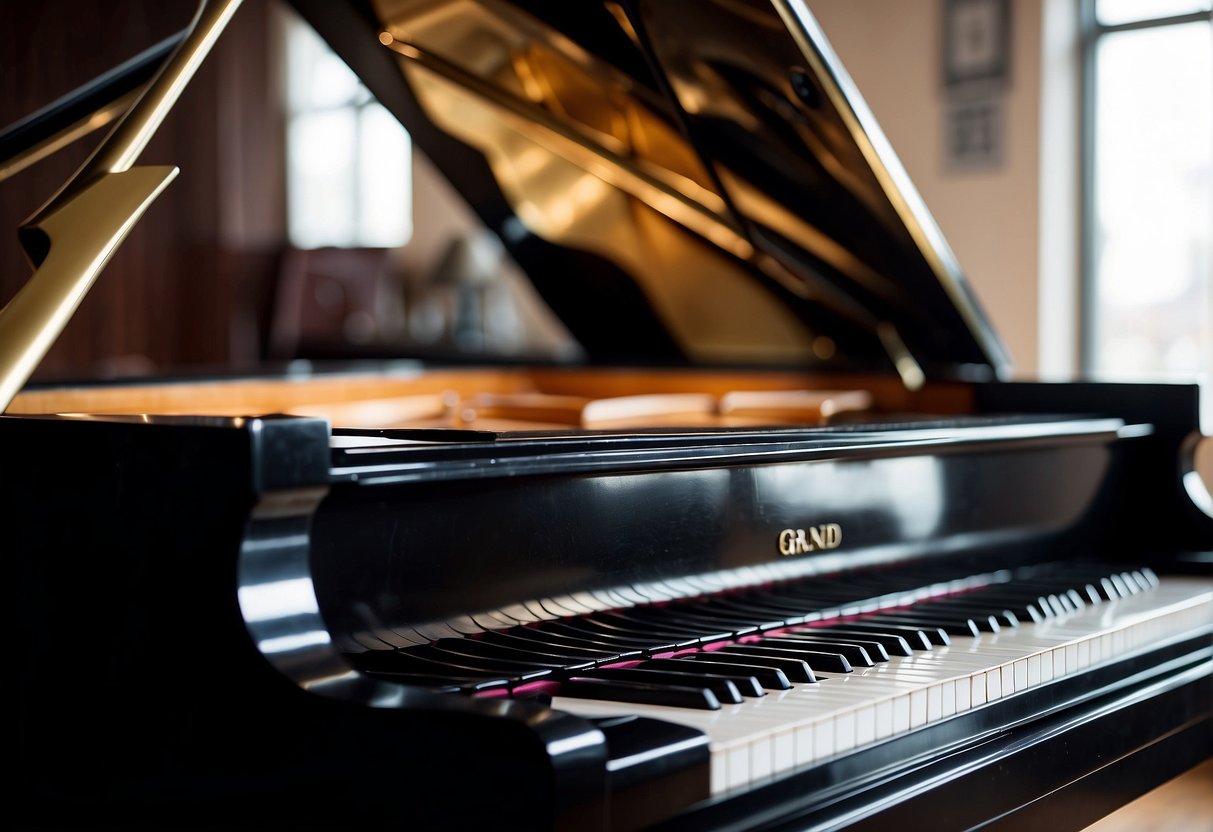
When you open the lid of your grand piano, you unlock the full potential of the instrument’s sound. Let’s explore how lifting that grand lid enhances the acoustics and the overall experience.
Full Sound Enhancement
By opening the lid, you allow the sound to freely escape and fill the space, resulting in a richer and more resonant tone. Instead of being trapped and muffled within the piano’s wooden case, the vibrations spread and blend to create a full sound that can captivate an audience.
Soundboard Interaction
The soundboard is like the heart of your grand piano’s sound production. When the lid is up, the soundboard interacts more with the surrounding air, which maximizes the volume and quality of each note. This is especially crucial during performances where your piano needs to project to the back of a large room.
Aesthetics and Performance Mode
A grand piano with its lid open is not only about sound; it also contributes to the aesthetics that define the classic concert look. In performance mode, with the lid propped up, you present a tradition of grandeur, signaling to the audience that they are about to enjoy a powerful sonic experience.
Opening your grand piano lid doesn’t just help with volume or sound acoustics; it places your instrument in its full glory, ready to deliver better sound, whether in a concert hall or your own living room.
Reasons for Closing the Grand Piano Lid
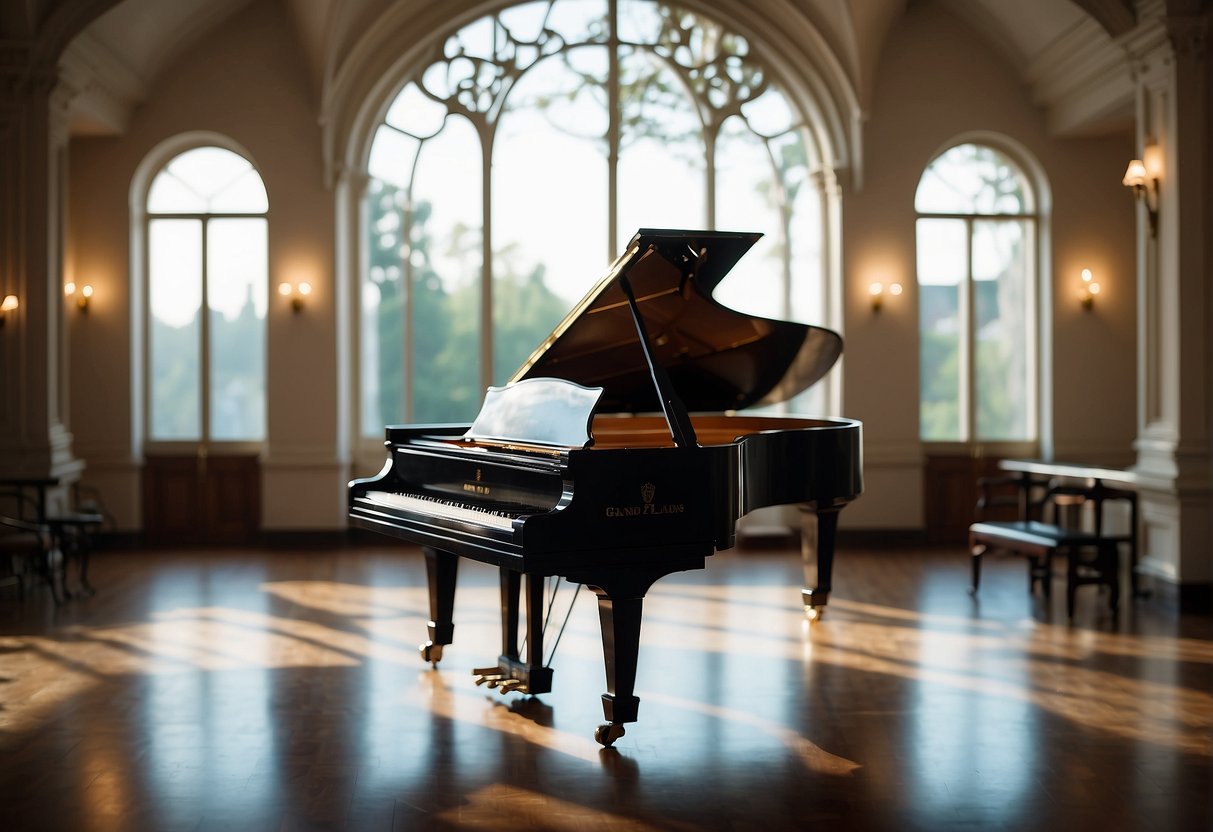
When you own a grand piano, protecting your investment and tailoring its sound for your environment are key concerns. Closing the lid can address these points effectively.
Protection Against Dust and Damage
Dust: It’s a pianist’s subtle foe. Your piano’s intricate interior mechanics can start collecting dust rapidly if left unprotected. By keeping the lid closed, you prevent particles from settling on the strings and the soundboard, which can lead to costly cleanings or repairs. Think of the lid as a built-in dust cover.
- Example: If you’re away on vacation, closing the lid will safeguard your piano from gathering airborne particles and help maintain its pristine condition.
Damage: The grand piano’s surface is also vulnerable to accidental scratches and spills. Whether it’s a curious child’s toy or a guest’s misplaced drink, a closed lid adds a layer of protection, reducing the risk of such incidents and maintaining the instrument’s value and appearance.
Managing Sound Volume
The open lid of a grand piano allows for the full projection of its harmonies. In a smaller room, this can create a muffled sound due to sound waves reflecting closely off walls. Lid closed reduces the volume, making it suitable for apartment living or late-night practices.
- Example: If you have sensitive ears or share walls with neighbors, lowering the lid can keep your practice sessions harmonious with your surroundings.
Pets and Security
Pets: If you have a pet cat or other curious pets, they might see the open grand piano as an invitation. A closed lidensures that your furry friends aren’t walking across the strings, potentially causing damage or being hurt by the piano’s internal mechanisms.
Security: A closed piano lid acts as a barrier. It secures the piano when not in use, especially important for institutions like schools where multiple people have access to the instrument. Preventing casual contact or tampering with the interior keeps your piano safe from unintended damage.
- Example: When your pet cats are left to roam the house unsupervised, shutting the lid can give you peace of mind that they won’t turn your precious instrument into their new playground.
Impact on Piano Sound and Tone
When you adjust your grand piano’s lid, you’re not just tinkering with its appearance, but significantly altering the nuances of your instrument’s sound and tone.
Treble and Bass Balance
Opening the lid of your grand piano affects the balance between treble and bass. With the lid raised, the high notes can gain a more resonant and projecting quality.
For instance, if you’re performing in a large room and desire a rich, immersive treble, you might opt to keep the piano lid open. On the flip side, closing the lid results in a subdued treble, which can be beneficial if you’re looking for a softer and more blended sound, especially in an intimate setting or when a bright treble could overpower the bass.
Intonation and Touch
Your grand piano’s intonation—or the precision of its pitch—and touch—the feel and responsiveness of its keys—can also be influenced by the position of the lid. Playing with an open lid tends to produce a clearer intonation as the sound waves have more space to resonate.
Moreover, the touch and response of your piano might feel more dynamic because the increased sound feedback allows for better control over the intensity and color of each note. If the treble feels too penetrating in a smaller room, partially closing the lid can achieve better balance without compromising the quality of the piano’s intonation.
Choosing Lid Position Based on Environment
When selecting the appropriate position for your grand piano’s lid, it’s essential to consider the environmental factors that affect both sound quality and the instrument’s well-being.
Room and Acoustic Considerations
Your room’s acoustics heavily influence the sound projection of your grand piano. In a small room with considerable soundproofing, leaving the lid fully open can cause excessive sound reflection, leading to a sound that is too overwhelming.
Conversely, in a larger, sparsely furnished room, an open lid can enhance the richness and volume of the sound. For example, in a home with high ceilings and hardwood floors, propping the lid open can allow the sound to disperse more freely, creating a fuller musical experience.

Hello & thanks for stopping by! I’m a professional concert pianist and piano instructor. In the United States, I’ve given successful performances in several places including New York, Florida, Connecticut, & New Jersey, I have also performed internationally in Italy and made my Carnegie Hall debut in 2014. I enjoy blogging about the piano, the art of performance, general music, current events and the latest in music production.